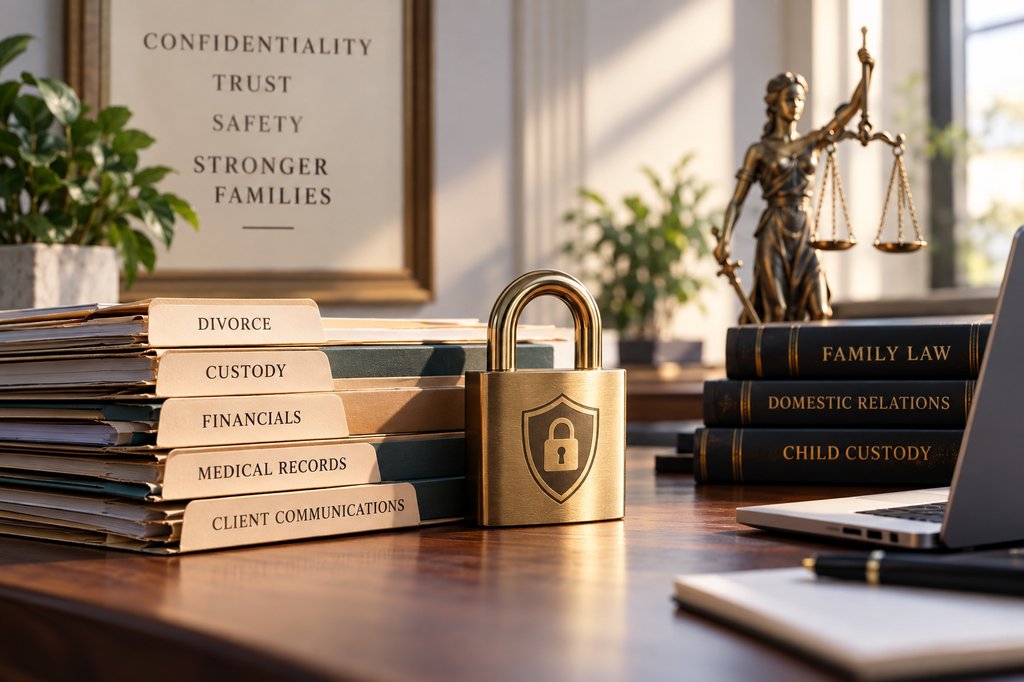
Family law cases involve deeply personal information: divorce financials, custody arrangements, past abuse, medical records, communications between spouses. Your clients share their most vulnerable moments with you.
The stakes in family law are emotional and financial. Your clients trust you with information they wouldn't share with anyone else. And they're counting on you to keep it confidential — especially when abuse, addiction, or custody disputes are involved.
Here's what concerns us: family law files are frequently the target of attacks from the other party's spouse or hired investigator. Firms that discovered someone had gained unauthorized access to a client's case files during a contentious divorce can be devastating. Imagine: sensitive communications about domestic violence or child custody are now in the hands of the opposing party – or exposed to the internet.
The confidentiality issues are twofold:
- Your professional obligation to keep client information private (ABA Rule 1.6)
- Your clients' real-world safety and privacy — especially in cases involving abuse or custody disputes
Here's what we recommend for family law practices:
- Encrypted storage for all case files, especially those involving abuse, custody, or financial disputes
- Strict access controls — only the attorneys and staff directly handling a matter should see it
- Secure client portals for document exchange instead of email attachments floating around
- Regular backups specifically because family law files often have long timelines — losing a custody exchange agreement or divorce settlement could delay justice
- Cybersecurity training for your team so everyone understands the sensitivity of what you handle
- Clear protocols for client communication about what data you're collecting and how it's protected
- Cybersecurity insurance, not just an add-on to a business policy
Family law firms are surprised by how much more secure and organized their practice becomes once they implement these protections. Clients feel safer sharing information. And you can focus on building cases instead of worrying about data security.
Your clients trust you with their vulnerabilities. Protect that trust — and your liability — by securing how you store and handle their most sensitive information. Let's talk about making your family law practice genuinely secure.