Estate planning documents are permanent. A will, a revocable trust, powers of attorney - these documents shape lives and finances for decades. Losing them or having them compromised isn't just an inconvenience. It's a catastrophe.
Estate planning is one of the few practice areas where a single mistake - or a single security breach - can have generational consequences. You're drafting documents that will be executed after your client passes away. If those documents are lost, corrupted, or modified, the client's intent is lost forever. If they're exposed, a beneficiary's information is compromised or a will is leaked before the estate is settled.
Here's what worries us most: probate firms that have experienced ransomware attacks, and because their backups weren't current, they lost access to original wills and trust documents. Imagine having to call a deceased client's family and tell them that the original signed trust is gone. Or having to reconstruct it from drafts and correspondence.
There are also situations where a disgruntled employee accessed client files, or where an attacker gained access to a firm's systems and threatened to expose beneficiary information, delete files, or publish will contents.
Here's what we typically recommend for estate planning practices:
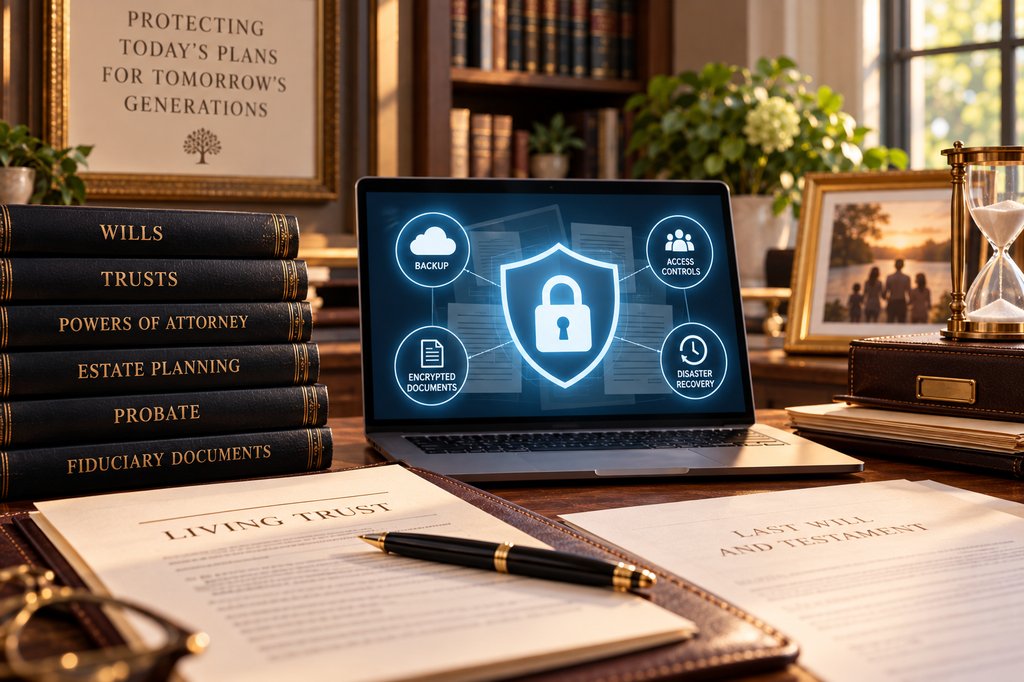
- Multiple, redundant backups of all estate planning documents - originals, signed copies, drafts. Preferably in the cloud where other employees or bad actors cannot access them.
- Regular backup testing to ensure you can actually restore files if you need to
- Encrypted storage of all wills and trust documents
- Strict access controls - junior staff shouldn't have access to every client's estate plan
- Secure document vaults for storing original signed documents (digital and physical)
- Cybersecurity insurance, not just an add-on to a business policy
- Version control to track all drafts and modifications
- Multi-factor authentication on all systems
- Cybersecurity training for staff on the sensitive nature of estate planning documents
- A disaster recovery plan specifically for your firm so you know what happens if you're hit with ransomware
Many estate planning firms have found that implementing these protections actually strengthens their relationships with clients. Clients know their documents are safe. Successor trustees can trust that the documents they'll need are backed up and accessible. And you can manage your practice with confidence.
Estate planning documents are sacred. They represent your clients' wishes and legacies. Protect them with the level of security and backup that honors that responsibility. Let's talk about ensuring your estate planning documents are safe for generations.