Understanding the real threat and what it means for your business
Executive Summary
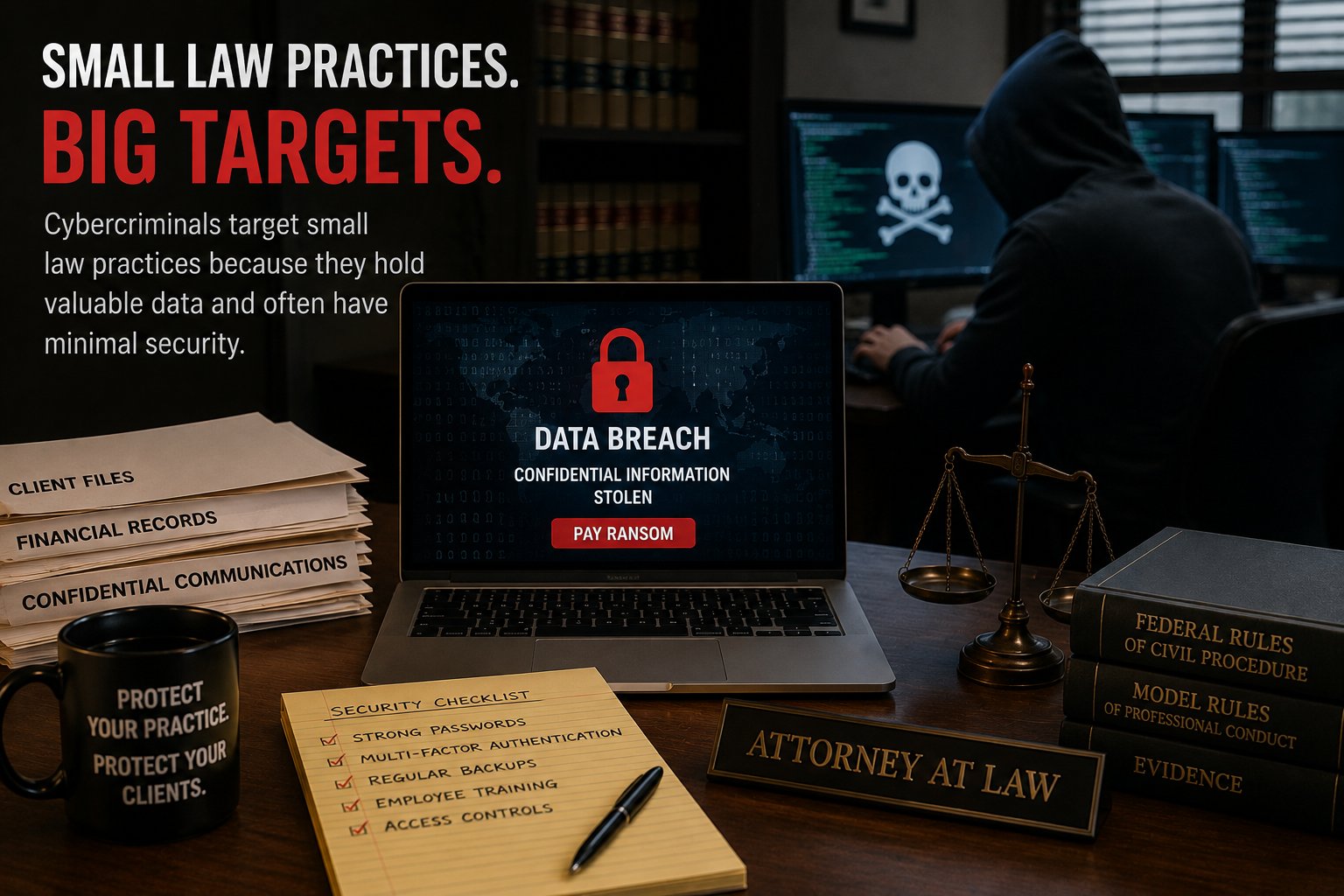
Small law practices are not too small to be targets - they are ideal targets. Nearly 30% of law practices reported a security breach in 2024, with smaller operations hit at the highest rates. Cybercriminals specifically target small legal practices because they hold valuable client data and typically have minimal security defenses in place. Understanding this threat is the first step toward protecting your business and your clients.
The Misconception We Hear Most
“Hackers go after big companies, right? We’re too small to be a target.”
We hear this almost every week from small law practice owners. It’s reassuring to think your operation flies under the radar. Unfortunately, it’s exactly backwards - and that misconception could cost you everything.
The Reality: Small Practices Are Prime Targets
Here’s what cybercriminals know, and what you should too:
You Hold Valuable Data
Every client file, financial record, and confidential communication represents someone’s legal matter, their secrets, their money, their future. That data is worth money on the dark web. It’s also a goldmine for extortion - attackers know law practices have compliance obligations and reputational concerns that make them more likely to pay ransom.
Your Defenses Are Likely Minimal
Unlike large operations with dedicated security teams and million-dollar budgets, small practices often operate with limited IT resources. Many are running on outdated systems, sharing passwords, using personal email for client communication, or relying on a single cloud service without proper access controls. Cybercriminals know this. They’re not looking for a fair fight - they’re looking for easy targets.
You’re Easier to Penetrate Than You Think
A phishing email to one staff member. A remote worker’s unsecured home network. A contractor’s laptop. A forgotten password written on a sticky note. It doesn’t take sophistication - it takes one mistake. And statistically, someone at your practice will encounter a phishing attempt this month.
The Data Doesn’t Lie
The 2024 ABA Cybersecurity Survey found that nearly 30% of law practices reported a security breach - and the hardest hit? Small operations.
Why? Because attackers conduct reconnaissance. They target practices they think they can compromise quickly. They’re running automated scans across thousands of websites looking for vulnerabilities. And they’re using simple social engineering because it works.
One ransomware attack can cost a small practice $50,000 to $500,000+ in recovery, downtime, and potential regulatory fines. For context, that’s often more than a year’s IT budget - or profit.
It’s Not Paranoia. It’s Preparation
We’ve worked with many practices and have seen this play out in two ways:
When the Breach Happens
A practice experiences a breach. They scramble to notify clients, hire forensic investigators, deal with regulatory scrutiny, and spend months rebuilding trust. The business survives, but it’s expensive and exhausting.
When the Practice Is Prepared
A practice invests in basic but consistent security practices - employee training, secure backups, access controls, monitoring - and quietly deflects attempts that would have succeeded at an unprepared operation.
The difference isn’t luck. It’s intentionality.
What This Means for Your Practice
You don’t need enterprise-grade security to be secure. You need:
- Awareness: Understanding that the threat is real and imminent, not theoretical
- Basics: Multi-factor authentication, strong password practices, regular backups, basic endpoint protection
- Culture: A team that thinks about security as part of their daily work, not as someone else’s problem
- Support: A partner who understands your constraints and can help you implement security that actually fits your workflow
Many practices start from a place of overwhelm. They don’t know where to begin, and they’re afraid of disrupting their existing workflow. That’s normal. The good news is that security doesn’t have to be complicated - it just has to be consistent.
The Conversation Starts Here
If you’ve been operating with the assumption that your practice is too small to worry about cybersecurity, it’s time to reconsider. The question isn’t if someone will try to breach your operation. The question is when - and whether you’ll be ready.
Many of our customers start with a simple conversation: What are your biggest security concerns right now? Maybe it’s remote work, client data protection, regulatory compliance, or just a general sense that something needs to change.
We’ve helped small practices build security practices that actually work - without requiring a full-time security team or a massive budget overhaul.
Next Steps
Your clients trust you with their most sensitive information. That trust is your greatest asset - and protecting it should be a priority.
If we can help in any way, please give us a call: 205-408-0600
Let’s talk about how to make your practice secure.