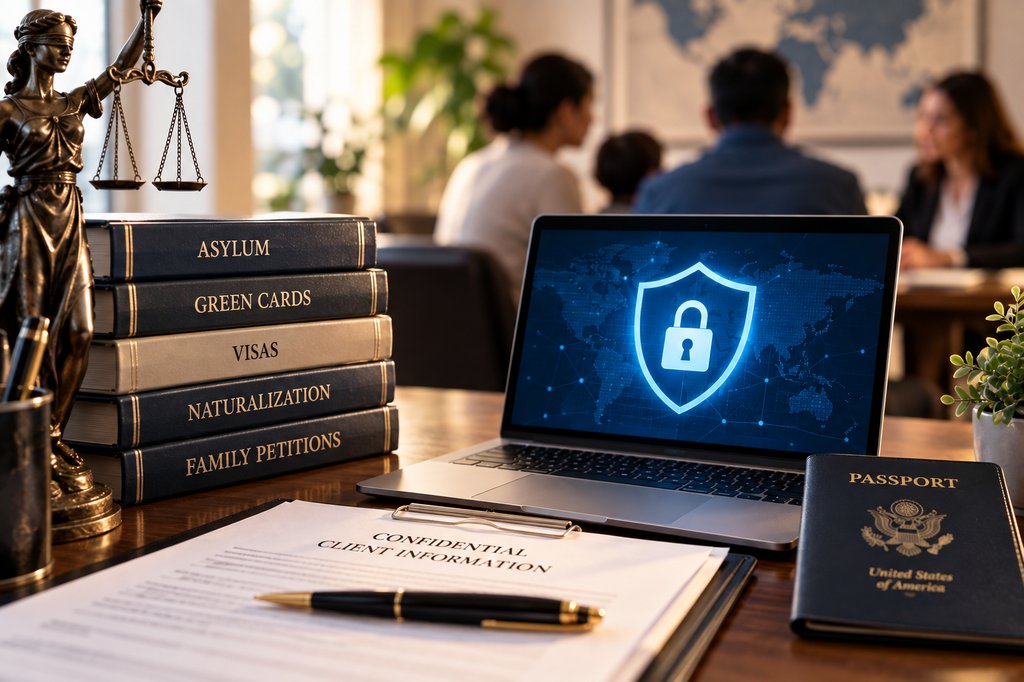
Immigration cases involve deeply sensitive personal information about vulnerable clients: background information that could be weaponized, family separation details, political persecution history, past trauma. This information is valuable to bad actors, and critically important to protect.
Immigration law is unique because you're often working with clients who are vulnerable, who may not speak English fluently, and who have legitimate fears about their information being exposed to government authorities or other parties. You're holding their life story, family information, financial details, and sometimes documentation of past trauma or persecution.
Here's what concerns us deeply: immigration firms are targets for both criminal attacks and nation-state actors. Your client files might contain information about political persecution, religious minorities, or family separation, information that could be used against your clients if exposed. There are also situations where unscrupulous immigration consultants or human traffickers have tried to access firm files to get information about vulnerable clients.
There's also the legal dimension: your clients are often in vulnerable immigration statuses. If their information is breached, they may face consequences, even if the breach wasn't your fault, the liability is yours. And imagine the emotional impact: you told your client their information would be safe, and then it gets compromised.
Here's what we typically recommend for immigration practices:
- Encrypted storage of all client files with the strongest possible encryption standards
- Strict access controls and verification that only people authorized to work on a case can see it
- Multi-factor authentication on all systems
- Secure client intake and communication processes
- Regular cybersecurity training for staff on the sensitivity of immigration cases
- Automatic backups with tested recovery procedures
- A clear confidentiality protocol about what happens if a breach occurs
- Privacy-focused communication channels for client correspondence (encrypted email)
- Incident response plan that includes notification to affected clients
- Regular security assessments to catch vulnerabilities before attackers do
Many immigration practices know that implementing these protections actually strengthens their client relationships. Clients feel safer. You can focus on their cases instead of worrying about whether their information is being handled properly. And you're meeting your professional and ethical obligations.
Your clients trust you with their vulnerability. That trust deserves protection that matches the sensitivity of what you handle. Let's talk about building an immigration practice with security that protects vulnerable clients.