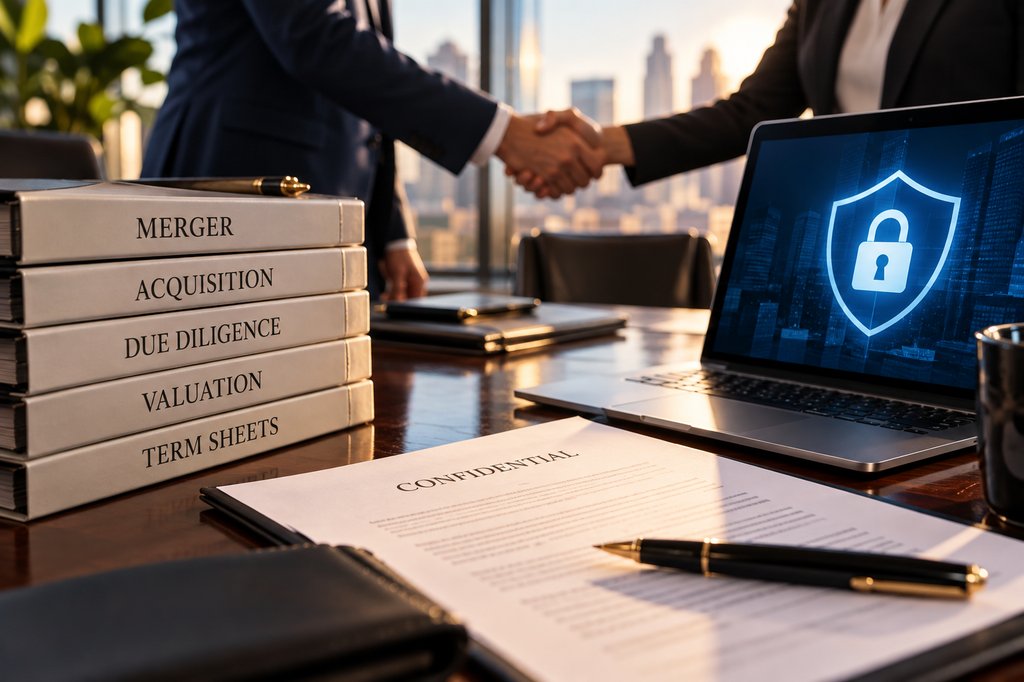
Corporate deals involve highly sensitive negotiations: bid amounts, valuation models, acquisition timelines, confidential financial information, intellectual property details. A breach during a transaction can destroy deal value and expose your client to competitive harm.
Business transactions are high-stakes events with tight timelines and massive financial implications. You're managing confidential information about valuations, terms, financing, and strategic decisions. If that information leaks to a competitor or is intercepted by an attacker, the entire deal could be compromised.
Here's what happens: during major transactions, deal teams often work at a feverish pace. Files get emailed back and forth, shared on consumer cloud services, left on USB drives, or stored on personal devices. Security measures get relaxed because everyone's focused on closing the deal. This is exactly when criminals strike - they know deals are happening and know people are distracted.
Firms have discovered, mid-deal, that sensitive term sheets have been compromised. Imagine: an attacker has your client's bid amount and is using that information to manipulate the seller or competing bidders. Or intellectual property details about a target company are exposed to competitors. That level of breach can sink a deal - or force a renegotiation where your client is at a disadvantage.
Here's what we recommend for corporate transaction practices:
- Secure, encrypted deal rooms for document sharing instead of email or consumer cloud services
- Role-based access controls - only deal team members see sensitive transaction documents
- Audit trails on all document access and modifications
- Multi-factor authentication for all team members accessing deal documents
- Secure communication channels for deal team discussions
- Regular backups of all transaction documents (you need these for post-close compliance and disputes)
- A clear protocol for verified communication - especially for last-minute deal modifications
- Cybersecurity training for deal teams on phishing and social engineering (these are common during high-stakes transactions)
- VPN access for remote deal team members
- Incident response plan in case something goes wrong mid-deal
Many corporate practices have found that implementing these protections actually speeds up deals. Everyone knows who has access to what. Files are organized and auditable. And clients know their sensitive information is being treated with the seriousness it deserves.
Your clients are making billion-dollar deals. They're trusting you to protect their interests - which starts with protecting their information. Let's talk about building secure infrastructure for high-stakes transactions.